Epitalon Research Peptide — Scientific Overview
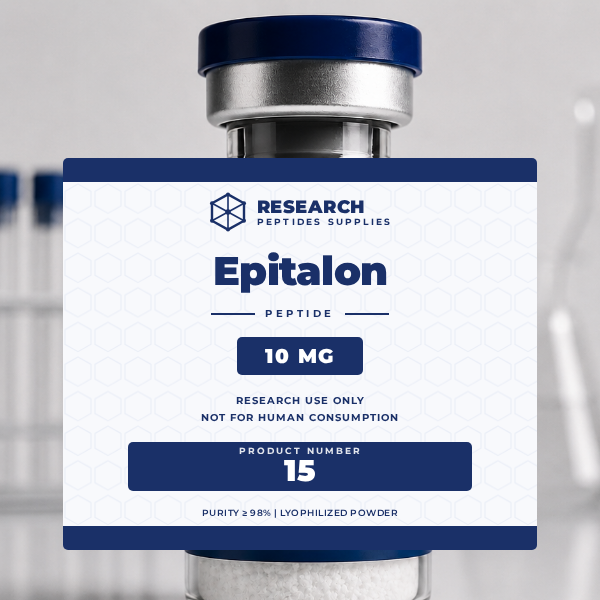
Epitalon (also spelled Epithalon; tetrapeptide Ala-Glu-Asp-Gly) is a synthetic tetrapeptide based on the natural polypeptide Epithalamin extracted from the pineal gland. Epitalon was developed and extensively studied by Professor Vladimir Khavinson and colleagues at the St. Petersburg Institute of Bioregulation and Gerontology, with research spanning several decades beginning in the 1980s. The peptide has accumulated a substantial body of peer-reviewed literature, primarily from Russian-language gerontology journals, with increasing international research interest in recent years.
Epitalon is one of the few synthetic peptides for which published research has directly investigated telomerase activation and telomere length preservation in human cell cultures. Telomeres — the protective caps at the ends of chromosomes — shorten with each cell division, and this shortening is closely associated with cellular senescence and biological aging. The capacity to study compounds that may influence telomerase activity makes Epitalon a valuable tool in aging and longevity research.
Research Background
The foundational research on Epitalon by Khavinson et al. demonstrated effects on pineal gland function, telomere biology, antioxidant enzyme activity, and lifespan extension in animal models. A widely cited 2003 publication documented Epitalon’s ability to activate telomerase in human somatic cells — an observation that has attracted significant attention from the aging research community. Additional research has examined effects on melatonin synthesis regulation, circadian biology, tumor suppression in animal models, and oxidative stress markers in aging model organisms.
Key Research Areas
- Telomere Biology: Telomerase activation and telomere length preservation in human cell models
- Aging Research: Cellular senescence pathways and lifespan modulation in animal studies
- Pineal Biology: Melatonin regulation and circadian rhythm research
- Antioxidant Research: Effects on antioxidant enzyme activity (SOD, GPx, catalase)
- Oncology Research: Tumor biology and carcinogenesis studies in preclinical models
- Neuroendocrine Research: Hypothalamic-pituitary regulation and peptide bioregulation
Technical Specifications
| Parameter |
Value |
| Sequence |
Ala-Glu-Asp-Gly |
| Molecular Formula |
C14H22N4O9 |
| Molecular Weight |
390.3 Da |
| Purity |
≥98% (HPLC-verified) |
| Form |
Lyophilized powder, sealed under argon |
| Storage |
−20°C (long-term); 4°C (short-term) |
| Documentation |
Batch-specific COA (HPLC + Mass Spec) |
Frequently Asked Questions — Epitalon Research
What is Epitalon and why is it studied in aging research?
Epitalon is a synthetic tetrapeptide (Ala-Glu-Asp-Gly) derived from Epithalamin, a natural polypeptide isolated from bovine pineal gland tissue. It was developed by Russian gerontologist Professor Vladimir Khavinson and is studied primarily in the context of aging biology because of its documented ability to activate telomerase in human somatic cell cultures and its effects on pineal gland function and melatonin production. The research interest centers on understanding whether peptide bioregulators derived from the pineal gland can modulate fundamental biological aging processes at the cellular level.
What telomerase research has been conducted with Epitalon?
A 2003 publication by Khavinson, Bondarev, and Butyugov in the Bulletin of Experimental Biology and Medicine reported that Epitalon activated telomerase activity in human somatic cells, including fetal kidney cells and human embryo lung diploid fibroblasts, as measured by PCR-based TRAP assay. The study reported telomere elongation in treated cells compared to controls and extended the replicative lifespan of the cell cultures. These are in vitro findings from a single research group and represent an early, hypothesis-generating stage of research — not clinical evidence of anti-aging benefit in humans.
What animal lifespan studies have been conducted with Epitalon?
Multiple animal lifespan studies by Khavinson and colleagues at the St. Petersburg Institute of Bioregulation and Gerontology have examined Epitalon effects in aging rodent models and Drosophila melanogaster (fruit flies). Studies in transgenic HER-2/neu mice prone to mammary gland cancer reported decreased tumor incidence and extended median lifespan in treated groups compared to controls. Drosophila studies showed lifespan extension in both male and female flies. These findings are from animal models and do not establish safety or efficacy in humans.
Is Epitalon approved for human use?
No. Epitalon is not approved by the FDA or any other regulatory authority for human therapeutic use. It is not a pharmaceutical drug or supplement. Epitalon supplied by Research Peptides Supplies is intended exclusively for qualified laboratory and scientific research use by trained professionals. It is not for human or animal administration in any context outside controlled laboratory research settings.
What purity standard and documentation does Research Peptides Supplies provide for Epitalon?
Epitalon from Research Peptides Supplies is independently verified at ≥98% purity using HPLC, with molecular identity confirmed by Mass Spectrometry. Each batch is assigned a unique lot number, and a batch-specific Certificate of Analysis (COA) documenting HPLC purity results, mass verification, and testing methodology is available for every order.
⚗️ Research Use Only: This product is strictly intended for qualified laboratory and scientific research use by trained professionals in appropriate laboratory settings. It is not intended for human or veterinary administration, therapeutic use, food supplement applications, or any use outside controlled research environments. Not for human consumption.