Kisspeptin Research Peptide — Scientific Overview
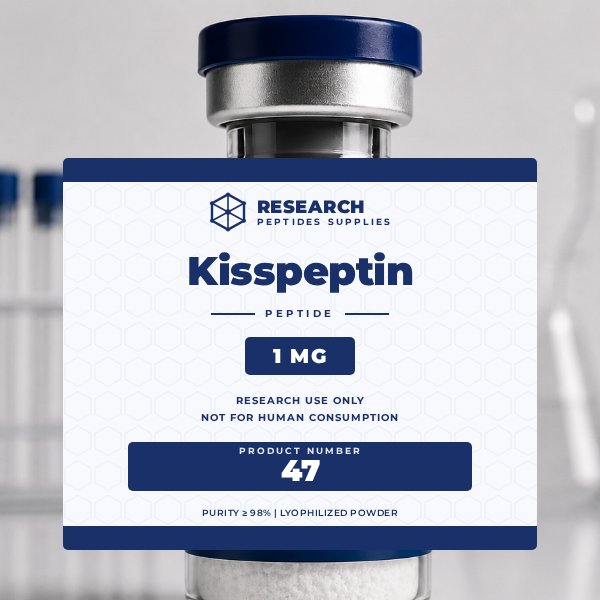
Kisspeptin is a family of neuropeptides encoded by the KISS1 gene that serve as master regulators of the hypothalamic-pituitary-gonadal (HPG) axis. The biologically active C-terminal decapeptide — Kisspeptin-10 — binds to the Kiss1R receptor (formerly GPR54) in hypothalamic GnRH neurons to stimulate pulsatile GnRH release, which in turn drives FSH and LH secretion from the pituitary and gonadal steroid production. Kisspeptin signaling is essential for the onset of puberty and for normal reproductive function throughout adulthood.
Kisspeptin is a family of neuropeptides encoded by the KISS1 gene that serve as master regulators of the hypothalamic-pituitary-gonadal (HPG) axis. The biologically active C-terminal decapeptide — Kisspeptin-10 — binds to the Kiss1R receptor (formerly GPR54) in hypothalamic GnRH neurons to stimulate pulsatile GnRH release, which in turn drives FSH and LH secretion from the pituitary and gonadal steroid production. Kisspeptin signaling is essential for the onset of puberty and for normal reproductive function throughout adulthood. Research with kisspeptin has revealed its role as the key integration point where metabolic status, photoperiod, gonadal feedback (sex steroids), and stress signals converge to regulate reproductive axis activity. Loss-of-function mutations in KISS1 or Kiss1R cause hypogonadotropic hypogonadism (arrested puberty), while constitutive activation drives precocious puberty — confirming kisspeptin’s essential gatekeeper role. Kisspeptin is studied as a tool to probe HPG axis regulation, test GnRH secretion mechanisms, and investigate conditions including hypothalamic amenorrhea, polycystic ovary syndrome (PCOS), and male hypogonadism.
Research Background
Research with kisspeptin has revealed its role as the key integration point where metabolic status, photoperiod, gonadal feedback (sex steroids), and stress signals converge to regulate reproductive axis activity. Loss-of-function mutations in KISS1 or Kiss1R cause hypogonadotropic hypogonadism (arrested puberty), while constitutive activation drives precocious puberty — confirming kisspeptin’s essential gatekeeper role. Kisspeptin is studied as a tool to probe HPG axis regulation, test GnRH secretion mechanisms, and investigate conditions including hypothalamic amenorrhea, polycystic ovary syndrome (PCOS), and male hypogonadism.
Key Research Areas
- Reproductive Biology Research: HPG axis regulation, GnRH pulse dynamics, and gonadal axis feedback studies
- Puberty Research: Kisspeptin’s role in pubertal onset and reproductive maturation
- GnRH Research: GnRH pulse generator biology and neuroendocrine regulation
- Fertility Research: LH/FSH regulation, ovulation induction, and spermatogenesis models
- Metabolic-Reproductive Axis Research: Energy status, leptin, and metabolic inputs to reproductive function
- Neuroendocrinology Research: Hypothalamic neuropeptide signaling and neuronal circuit biology
Technical Specifications
| Parameter | Value |
|---|---|
| Classification | Kisspeptin-10 (C-terminal decapeptide of kisspeptin, Kiss1R agonist) |
| Molecular Weight | ~1302 Da (kisspeptin-10) |
| Purity | ≥98% (HPLC-verified) |
| Form | Lyophilized powder, sealed under argon |
| Storage | −20°C (long-term) |
| Documentation | Batch-specific COA (HPLC + Mass Spec) |
Storage & Handling (Research Laboratories)
Lyophilized Kisspeptin should be stored at −20°C for long-term preservation, protected from light and moisture. For short-term active research use, 4°C storage is acceptable for up to approximately 4 weeks. Minimize repeated freeze-thaw cycles. Follow standard laboratory peptide reconstitution and handling protocols for all experimental use.